Showing posts with label Daily Mail. Show all posts

Saturday, March 31, 2012

7,000 DRIVERS' NAMES SOLD TO CRIMINALS: HOW DVLA MADE £21m SELLING DETAILS OF 4.85m MOTORISTS

  • The number of personal records sold has tripled since 2006
  • Sensitive data on 85,0000 drivers went missing after parking firm went bust
  • Another company sold on details for profit
By GEORGE ARBUTHNOTT, ANDY WHELAN, ABUL TAHER and MARTIN DELGADO

The Driver and Vehicle Licensing Agency has sold sensitive personal details of more than 7,000 drivers to a convicted criminal and his company.
Today’s revelation comes despite the quango’s promises to clean up its act  in the wake of a similar scandal seven years ago.
Yet The Mail on Sunday can disclose that the DVLA sold motorists’ names  and addresses to a parking enforcement company just seven weeks after it admitted dozens of criminal offences.
Douglas Harris
Dale Key
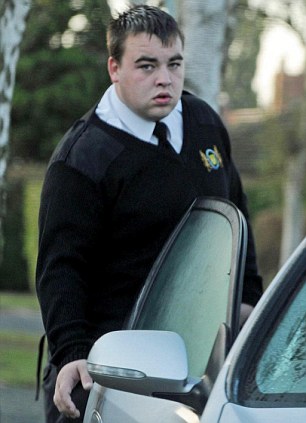
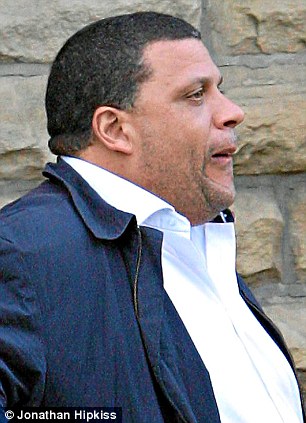
'Reckless': Douglas Harris, left, admitted 36 offences. Right, Dale Key has 'no idea' what happened to the details of 85,000 drivers
Agency chiefs knew that Observices Parking Solutions and boss Douglas  Harris had been fined £29,850 after a court ruled it had been ‘recklessly unfair’ to drivers last year – but they still sold on the personal details.
The Mail on Sunday can also disclose the DVLA has sold 4.85 million drivers’ names and addresses to parking enforcement firms in the past six years at £2.50 a time – without checking if the companies’ use for the private information was legitimate.
 
This includes details of nearly one million drivers being passed to 12 firms that were subsequently suspended from accessing the register due to wrongdoing or bankruptcy.
As well as these records, which were sold and accessed electronically, companies pursuing parking fines can make individual postal applications to the DVLA, boosting its income from the sale of personal data to £20.8 million over the past five years.
Last night, Labour MP Anne McGuire said: ‘It is unacceptable that the DVLA is still handing out this confidential information on drivers without doing due diligence on either the companies or the individuals at the head of those firms.’
In 2005, we revealed the agency had sold personal data to two convicted criminals who ran a wheel-clamping firm, prompting Ministers to announce a crackdown and to the DVLA making a string of reforms.
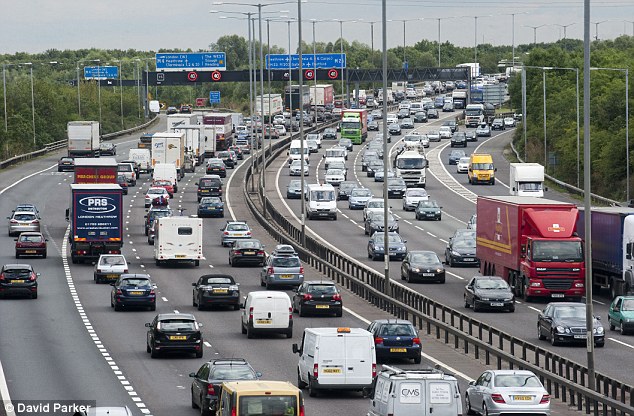
The Mail on Sunday can also disclose the DVLA has sold 4.85¿million drivers¿ names and addresses to parking enforcement firms in the past six years at £2.50 a time
The Mail on Sunday can also disclose the DVLA has sold 4.85million drivers names and addresses to parking enforcement firms in the past six years at £2.50 a time
At the time, the DVLA said it would start checking the criminal records of applicants for its data – although it refused to say that a conviction would be a bar in the future.
Our new investigation has found:
  • The number of names and addresses being sold by the DVLA to parking enforcement companies has more than tripled since 2006.
  • The agency plans to make significant profits from selling the details by upping the fee to help plug a £100 million gap in its finances.
  • Another parking enforcement firm is alleged to have broken DVLA rules by selling thousands of drivers’ name and addresses at a profit to another company.
  • A further parking company bought the details of 85,000 drivers, but a director admits he does not know what has happened to the data after his firm went into receivership.
Currently, 23 companies have  been approved to receive the data electronically from DVLA vehicle records within 24 hours of applying. The agency makes no checks on the legitimacy of the applications.
Other parking companies can receive the data only by submitting postal applications, which are individually vetted by the DVLA.
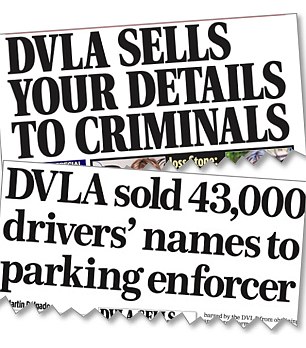
Leading the way: How the Mail on Sunday has reported the DVLA scandal
The DVLA says firms are allowed electronic access only after a six-month probationary period, during which their applications are closely monitored. However the new string of cases raises fresh concerns over the misuse of the data obtained through the electronic system.
Harris’s firm OPC has bought 23,663 motorists’ names and addresses from the DVLA since 2006. Last year, Wolverhampton Trading Standards investigated  a number of claims that OPC was breaching the code of practice imposed by industry trade body, the British Parking Association (BPA).
These included sending parking tickets to car owners up to five months after they parked, erecting misleading signs, dismissing legitimate appeals and unnecessarily involving debt collection agencies.
In March 2011, Harris and OPC admitted 36 offences at Wolverhampton Magistrates’ Court, which said the firm had been ‘unreasonable, unfair, intransigent, and had deliberately misled motorists’ as it  imposed the substantial fine.
Harris, as the company’s director, admitted ‘recklessly engaging in unfair commercial practice which contravenes the requirements of professional diligence’. This is a criminal offence under The Consumer Protection from Unfair  Trading Regulations 2008.
Harris admitted taking more than the required 28 days to request details of the owners of vehicles from the DVLA.  He also pleaded guilty to displaying 15 misleading signs and sending letters from a debt recovery firm without revealing it was owned by OPC itself.
The DVLA suspended OPC from accessing drivers’ details electronically, as the BPA carried out an investigation into the firm. But just 44 days later, the trade body gave OPC a clean bill of health and the DVLA lifted the suspension.
This allowed OPC to immediately obtain the drivers’ details of 1,120 vehicles it claimed to have caught parking illegally during its suspension. In the past 12 months OPC has bought details of 6,000 more drivers.
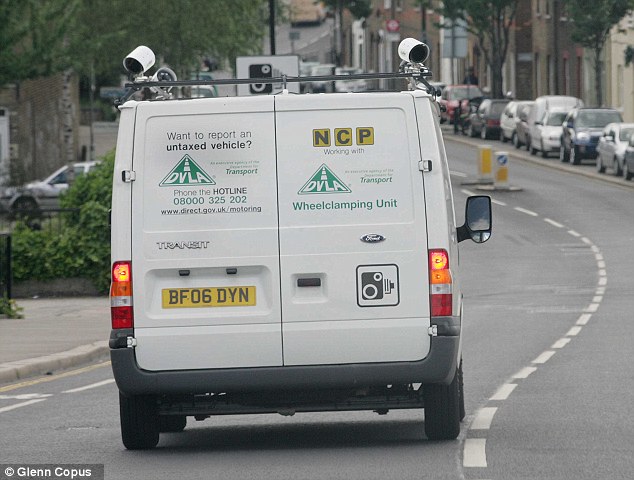
The Driver and Vehicle Licensing Agency has sold sensitive personal details of more than 7,000 drivers to a convicted criminal and his company.
The Driver and Vehicle Licensing Agency has sold sensitive personal details of more than 7,000 drivers to a convicted criminal and his company
The Mail on Sunday visited the company’s offices, but Harris was unavailable for comment.
A BPA spokesman said: ‘Our compliance team carried out an inspection of the services provided by OPC and were satisfied that significant efforts had been made to rectify their practices.’
'I don't know what happened to the data'
In 2005, The Mail on Sunday revealed the DVLA had sold drivers’ details to the bosses of a Portsmouth wheel-clamping firm. The company’s directors were jailed for blackmail and extorting money from motorists. Several reforms were made, but campaigners say the process is still open to abuse.
Last week we revealed how the boss of parking enforcement firm Wilsea Services, which was struck off by the BPA last month, was sold the names and addresses of 43,000 motorists by the DVLA in just 20 months. The firm, owned by Stephen Warburton, has now been accused of breaking DVLA rules by profiting from selling on personal details.
A director of parking firm Debt Recovery Plus said he paid Wilsea £3 each for thousands of names. Gary Brierley said: ‘We paid them  a fee to use their link. We paid  them 50p per detail on top of the £2.50.’ Mr Warburton who is believed to be working in America, was  unavailable for comment.
Another parking firm, Central Ticketing bought the details of 85,000 drivers despite being the subject of a string of investigations. But the company went into receivership last year and director Dale Key, 27, said he has ‘no idea’ what happened to the details.
He said: ‘When it was liquidated I completely took my hands off it. I don’t know what happened to the data.’
A DVLA spokesman said: ‘Landowners have a right to impose legitimate parking rules so we have to strike a balance – allowing fair enforcement but protecting motorists. 
‘That is why information is only provided under strict controls to parking firms who meet the standards set by an appropriate accredited trade association and are compliant with its code of practice.
‘All companies which make electronic requests have to serve a six-month probationary period where their requests are closely monitored.’
A spokesman for the BPA said: ‘Ultimately we can expel a member, which removes an operator’s access to the DVLA database, but there are many who operate without access. 
‘We have repeatedly asked the Government to make it illegal for such companies to trade without any form of regulation but they have, so far, refused to do so.’
 http://www.dailymail.co.uk/news/article-2123390/7-000-drivers-names-sold-criminals-How-DVLA-21m-selling-details-4-85m-motorists.html?ICO=most_read_module

Saturday, July 16, 2011

'CASH COW' SPEED CAMERAS WILL BE NAMED FOR THE FIRST TIME IN TRANSPARENCY DRIVE

By Kirsty Walker 27th June 2011

The speed cameras raking in the most money are to be identified for the first time.

Motorists will be able to see previously unavailable figures showing the number of speeding prosecutions and the accident rate at camera sites.

In a victory for drivers, the move could spell the end for those cameras that do not save lives.

Gatso speed camera on the M11 southbound between junctions 5 and 4 in Essex where there has been an increase in accidents

Gatso speed camera on the M11 southbound between junctions 5 and 4 in Essex where there has been an increase in accidents

Although ministers do not have the power to make local authorities switch the cameras off, they expect public pressure will force them to dismantle any shown to be merely money-spinners.

Until now, councils have been reluctant to reveal which cameras brought in the most revenue from fines, with details having to be prised out of them using Freedom of Information laws.

Mike Penning MP said the government don't want information about speed cameras to be hidden any more

Mike Penning MP said the government don't want information about speed cameras to be hidden any more

Critics say the cameras are used to raise money rather than save lives. The income from fines goes to the Treasury, not the councils responsible for installing and managing them in partnership with the police.

Now local authorities have until July 20 to start publishing the numbers of accidents and casualties at camera sites, both before and after they were installed.

The information will create a league table of Britain’s busiest speed cameras and show their effectiveness in saving lives.

Road safety minister Mike Penning said: ‘We want to stop motorists being used as cash cows. For too long information about speed cameras has been hidden in the shadows. This data will end that by clearly showing whether a camera is saving lives or just making money.’

There are now about 6,000 of the cameras in Britain, estimated to be generating £100million a year in fines. Information on collisions and casualties dating back to 1990 will have to be made public.

Research suggests speed cameras have triggered at least 28,000 crashes since 2001. Motorists who spot one ahead often drive erratically, lose concentration and brake suddenly, causing problems for other drivers. More than 80 per cent of drivers say they look at their speedometers rather than the car in front when they approach one.

A camera on the M11 in Essex has been found to double accidents - and rack in more than £1m a year

Launching the transparency drive yesterday, Mr Penning said: ‘This will expose where cameras are and are not doing their job.

‘We can only do what we do with road safety if people believe it isn’t just about raising money but is about saving lives. What this will show is where there weren’t any accidents before, and accidents afterwards are minimal, or may even have gone up because people have reacted differently.

‘But it will also expose where accidents have dropped.’

Peter Roberts, of the Drivers’ Alliance group, said: ‘Speed cameras don’t improve safety. They’re often placed to generate the maximum revenue. Speed is to blame for only 4.7 per cent of accidents.’

http://www.dailymail.co.uk/news/article-2008340/Cash-cow-speed-cameras-named-time-transparency-drive.html#

Monday, June 27, 2011

WHAT REALLY GOES ON IN THE HOUSE OF LORDS

Hiding herrings in the Chief Whip's drawer, partying with Playboy Bunny Girls... Britain's most outrageous peer on what REALLY goes on at the Lords

By Jane Fryer 25th June 2011

Robert Washington Shirley, 13th Earl Ferrers, is sitting up very straight in his flowery sitting room. He is immaculate in dove-grey suit, matching socks and canary-yellow tie, boasts a mahogany tan, beautifully slender ankles and a fabulous white clipped moustache that would put Omar Sharif to shame — and is busy barking instructions at the photographer.

‘Is my suit straight? Is my hair sticking up? Don’t, whatever you do, show my ankles! And don’t make me look like an effete old buffer!’

And with that, he grins, gurns, rolls his eyes like a madman, waves his hands around and generally acts the goat.

Practical joker: Earl Ferrers at home in his Norfolk garden

Practical joker: Earl Ferrers at home in his Norfolk garden

Earl Ferrers is 82 years old and might as well have sprung straight from the pages of a P.G. Wodehouse novel.

His title dates from William the Conqueror - ‘the family tree measures 13ft by 30ft, so the only place we can unfurl it is the tennis court’.

He is one of the longest-serving members of the House of Lords (he’s served five Conservative Prime Ministers), has spent a good deal of time playing practical jokes involving rotting fish, ice cubes and drawing pins on his fellow Lords, and claims that his sole legislative legacy was to keep pubs open all day on Sundays - and that was by mistake.

He is also utterly charming, fabulously modest - when the last Labour government culled all but 92 of the hereditary peers, he topped the ballot to stay - and is overflowing with stories, all detailed in his rollicking memoir, Whatever Next?, which has just been published.

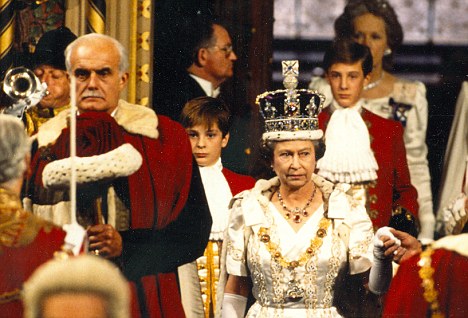
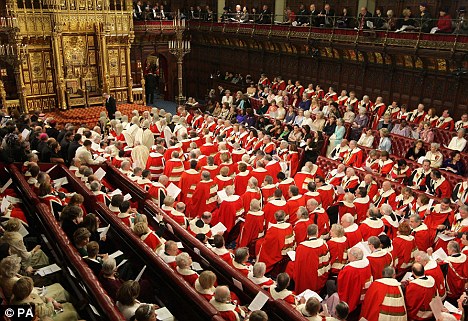
Peer's progress: Earl Ferrers accompanies the Queen during the State Opening of Parliament

Peer's progress: Earl Ferrers accompanies the Queen during the State Opening of Parliament

There was the time he found himself at the Department of Trade and Industry, negotiating with Jacques Chirac in Europe about clementines - ‘What did I know about the Great Clementine War? Not a thing!’

Or when he hid a dead herring in the desk of Lord (Bertie) Denham - Chief Whip throughout the Eighties — when the latter was off fishing.

‘I bought it at the fishmongers specially and popped it in his desk. By the time he got back on the Monday, it was terribly smelly. So he screamed and put it in my desk, which I thought was rather childish. So I threw it at him. And he threw it back. Finally, I put it in his briefcase and he went berserk.’

And the dreary ministerial lunch on Alderney that he perked up by challenging his fellow diners to squeeze through a metal coat hanger - ‘the lunch went like a house on fire after that’.

Not forgetting the House of Lords’ jolly to the then newly opened Playboy Club in London’s Park Lane.

‘We’d had a great dinner with Alec Douglas-Home who was the PM and, when he’d gone, Bertie Denham - who’d just become a member - suggested an outing.

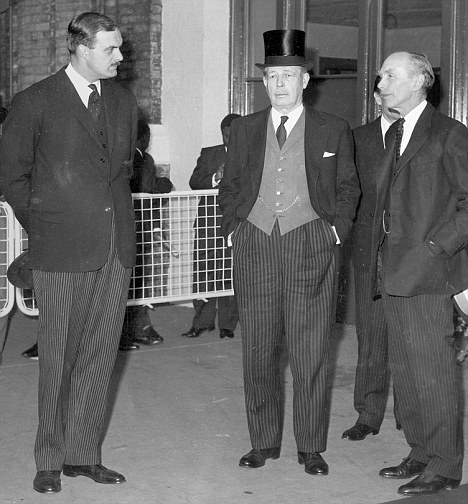
Powerful company: Earl Ferrers (far left) with Harold Macmillan (centre) and the Earl of Home early on in his career

Powerful company: Earl Ferrers (far left) with Harold Macmillan (centre) and the Earl of Home early on in his career

‘Lord Carrington, who was the Leader of the Lords, said “Yes please!”, and Michael St Aldwyn, the Chief Whip, thought it was important he accompany the Leader to make sure no harm came to him. Lord Goschen, the Deputy Chief Whip, thought he should go along to keep an eye on the Chief Whip - and I went just for the fun.

‘And what fun! You can argue the rights and wrongs of Bunny Girls, but they are enormously attractive. Fishnet stockings up to here,’ he says, gesturing extravagantly. ‘Very tight basques and cleavage and all that, with rabbits’ ears and powder-puff tails.

‘And they had staggering figures. I can still see Lord Carrington turning round and saying, “Good heavens, it’s just not possible!”

‘It was a very jolly evening and very innocent. But it’s odd because, 40 years later, I can still remember that evening with more pleasure and accuracy than the many bills I helped to place on the statute book.’

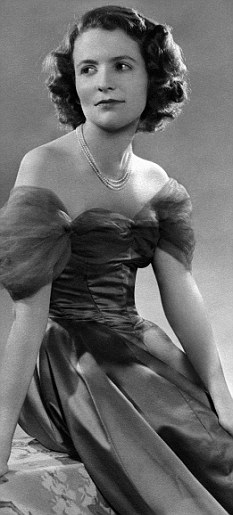
Countess Ferrers in 1948

Countess Ferrers in 1948

And there were many. During his 60 years of public service, Earl Ferrers has held ministerial positions in the Ministry of Agriculture, Fisheries and Food, the Home Office, the DTI and the Department of the Environment (‘Argh! The long hair and sandals brigade’), as well as performing stints as Government Whip, Joint Deputy Leader of the Opposition and Deputy Leader of the Lords.

He worked under Harold Macmillan (‘rather distant’), Ted Heath (‘quite prickly’), Margaret Thatcher (‘tremendous person - absolutely terrifying, of course, but awfully kind’) and John Major (‘terribly nice person, but much maligned’).

And if it all sounds worryingly like Yes Minister!, he insists: ‘Yes, it was just like that!’

So was he ever a bit, well, out of his depth? ‘Oh, like mad! Like mad!,’ he says. ‘I was sent to Brussels to negotiate the price of agricultural commodities. Me? Negotiate? I had never negotiated anything more vital than a packet of sweets.

‘And Question Time — arggh! You’re asked a question you’re expecting and, of course, you know the answer, but then there are all the supplementary questions and you don’t have the slightest idea.

‘But at least then people used to ask all sorts of interesting things, such as: “How likely is it that space detritus will fall on the House of Commons?”

‘Now people ask such boring questions. And the supplementary questions go on and on and on . . .’

Robert (Robin) Washington Shirley was born on June 8, 1929, the eldest child and only son of Robert Shirley, 12th Earl of Ferrers and wife Hermione.

Educated at West Downs School, Winchester College — ‘I loved it, but I never came top in anything’ - and Magdalene College, Cambridge, he did his National Service in Malaya in 1949 (‘I spent most of it lost in the jungle’), married Annabel, his beloved wife of 60 years, in 1951 and watched heartbroken when his family seat, Staunton Harold Hall, in Leicestershire, was sold for just £10,000 to pay death duties and taxes the day after his father died (‘it’s now owned by the son of our old butcher - how about that?’)

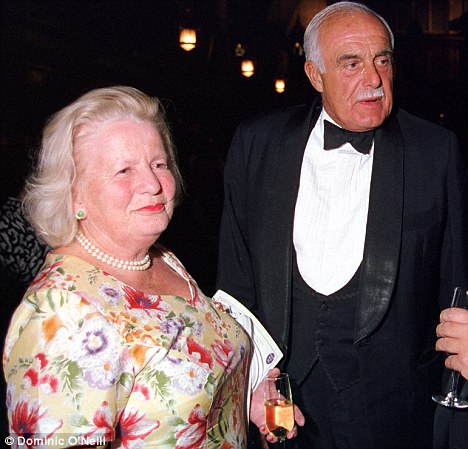
Great fun: The Earl and Countess Ferrers have been married for 60 years

Great fun: The Earl and Countess Ferrers have been married for 60 years

Annabel was an only child, so her family seat, Ditchingham Hall - a huge Queen Anne mansion with a stuffed bull in the hall and a sugar beet and pea farm attached - came their way.

And so he embraced ‘a life of sugar beet and cow pats’, invented a helium-filled pigeon-scarer shaped like an enormous sparrowhawk, and pioneered an ingenious central heating system fired by bales of straw.

‘It was wonderful,’ he recalls. ‘Ours was the warmest house in Norfolk - and all on just three bales a day in the winter and one in the summer!’

Meanwhile, politics beckoned - ‘I couldn’t have picked two less well-paid professions!’ - and, aged 33 and now a father of five, he joined Harold Macmillan’s government in a role called Lord-in-Waiting.

‘Lord Longford used to say the post was the lowest form of political life.’

The duties were not onerous.

‘One was a Government Whip in the House of Lords, but every six weeks or so you would have a week when you represented the Queen, meeting people at airports - I had a disaster with President Tito of Yugoslavia when Heath and I got stuck the wrong side of the barriers - and saying goodbye to others. You were driven around in a huge Rolls-Royce with a crown on it and took precedence over everyone, even the PM.’

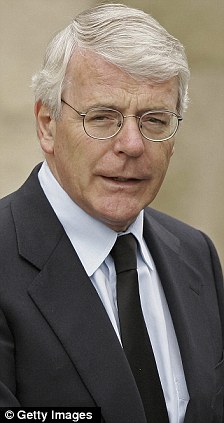
Former Prime Minister John Major arrives for the funeral of former Prime Minister Sir Edward Heath
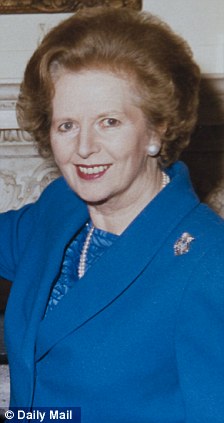
Former Prime Minister Margaret Thatcher

Who's the boss? Earl Ferrers served under five prime Ministers, including John Major and Margaret Thatcher

Somehow, though, he must have done a good job, because he was constantly busy - despite all the buffoonery, practical joking and taking his eye off the ball during the Licensing Bill’s passage through the Lords.

‘I was in charge of making sure the new licensing laws didn’t affect Sundays, but I wasn’t concentrating and missed the second count and it went flying through! Imagine that - I changed the law single-handedly and by mistake, and they never did alter it. I thought I’d be in the most terrible trouble, but they just put it down to a cock-up.’

His stint, however, as Minister for the Environment - where he wrestled with bills concerning bees, bats, tortoises and all manner of endangered species - was not a match made in heaven.

‘All these wretched, interfering people saying you mustn’t chop down wood and you mustn’t burn it because that’s where the lice breed. The lice? Lice have been breeding happily for years!

‘And they tried to put everything - the dung beetle, the bat and all the things I consider a nuisance - on the endangered species list where we immediately forgot about them and they bred like mad.’

Public service: But there are some aspects of the parliamentary process that the Earl does not approve of

Public service: But there are some aspects of the parliamentary process that the Earl does not approve of

He had no truck with global warming, either then or now. ‘Of course there are problems, and of course the world’s always changing,’ he says, ‘but why is it suddenly all going to pack up in 2011? I don’t believe it.

‘And all this palaver about carbon footprints and then everyone jetting off to international meetings to discuss them.’

But through it all, he was unfailingly courteous, extremely hard-working and displayed an unerring ability to jolly up any dreary or unpleasant occasion with his wit and charm.

Such as the time, in 1992, when he was stopped outside Bury St Edmunds for doing 60mph in a 40mph zone and fired off a missive praising the police officer’s ‘height of courtesy, understanding and manners and impeccable conduct when making his arrest’.

Or when, in 1990, fresh from a second hip replacement and in his bright-red dressing gown with his hair standing on end, he came face to face with an intruder in Ditchingham Hall.

‘The chap was going to scarper down the stairs, so I hit him with my crutch. And then again for good measure, and frog-marched him downstairs.

‘Are you a magistrate’s justice?’ he asked, as I called the police.

I said: ‘No.’

‘Thank goodness,’ he replied. ‘I thought you were somebody important.’

‘I didn’t like to tell him I was the Minister in charge of the police — I thought that would be pulling rank.’

Not surprisingly for a man of his generation, Earl Ferrers holds some fairly robust views.

He is a not a fan of today’s political correctness (‘it’s all gone bonkers’) or health and safety madness (‘you can’t walk down a street in case a branch falls on you’).

He is also a firm fan of capital punishment - despite his ancestor, the 4th Earl Ferrers, being hanged by a silken rope for murdering his steward.

The first Earl Ferrers was a ‘vigorous procreator’, had 27 legitimate children and still holds the Guinness Book Of Records title for 51 illegitimate children.

‘But how on earth do they know? Some of these pop star people today could have children all over the place!’

Recently, he has watched with horror as the House of Lords was systematically dismantled by successive governments.

‘They’ve chucked out all the law lords, they’ve disposed of the Lord Chancellor - wonderful man - great gown and all. It’s not just people dressing up for the sake of it. There’s a point to all these traditions - it’s all about the constitution.’

Awful: The Earl is not a fan of current House of Commons speaker John Bercow

Awful: The Earl is not a fan of current House of Commons speaker John Bercow

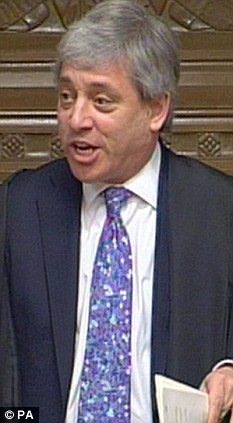
But it’s John Bercow, the Speaker of the House of Commons, who really gets it in the neck:

‘He’s awful. Just awful!’ says Earl Ferrers. ‘You don’t want to see the Speaker wandering about in a gaudy tie and looking like a geography master, do you?

‘And the other day, when he introduced Barack Obama — “Ladies and Gentleman, I give you the President of the United States . . .” anyone would have thought this was the London Palladium!’

They don’t make men like Earl Ferrers any more. These days he is having a difficult time, what with bad knees, bad hips and the ill health of his beloved Annabel and one of his daughters. But don’t expect a word of complaint.

‘I’m a terrible worrier, but my philosophy, whatever difficulty I’m facing, is to remind oneself how very lucky one is. And I don’t want to sound too soppy, but it’s all been such fun.

‘I’ve got a smashing wife and wonderful children and grandchildren — there’s so much to be grateful for. And I’ve loved my time at the Lords.’

Where it is very much business as usual in the office he still shares with Lord Carrington, Lord Waddington, Lord Wakeham and, of course, Bertie Denham.

‘There are still lots of giggles — we have the most enormous fun.’

And with that we say our farewells. Me, terribly grateful that people like Earl Ferrers still exist. And he, barking at the photographer: ‘Now young man, I hope you haven’t got me in a slouching position!’

Sunday, December 19, 2010

OFF WITH HER HEAD:RUSHED THROUGH LEGISLATION WILL LET FOREIGN OWNER OF PRIVATISED ROYAL MAIL REMOVE QUEEN'S HEAD FROM STAMPS

By Brendan Carlin 19th December 2010

The Queen: There is anger at the Palace over the sell-off plans

The Queen: There is anger at the Palace over the sell-off plans

The Queen’s head could disappear from British stamps as part of controversial plans to sell off the Royal Mail, it was revealed last night.

Ministers are locked in frantic talks with Buckingham Palace to discuss how the monarch will be represented – if at all – on future stamps after the Government confessed it had failed to guarantee that the Queen’s image would survive.

Postal Affairs Minister Ed Davey admitted that current sell-off rules left future private owners, potentially including German mail operator Deutsche Post, completely free to stop using a representation of the monarch’s head which has appeared on every British postage stamp since Sir Rowland Hill invented them in 1840.

Liberal Democrat MP Mr Davey insisted he was ‘aware of the issue’ and revealed that negotiations with Buckingham Palace to close the loophole were under way.

But Royal insiders said that ‘anger’ at the Palace at the proposed sale had been heightened by the fear that it could be rushed through in advance of the 2012 Diamond Jubilee, when a range of special stamps is expected to be produced.

One said: ‘The Palace don’t like this privatisation at all but they are particularly keen to delay it until after the Jubilee if they possibly can. That could explain the delay.’

And Labour raised suspicions that the Coalition had deliberately kept restrictions on a future buyer as light as it could because it was ‘desperate’ to encourage foreign buyers to pay as much cash as possible for the mail service.

The Postal Services Bill to allow the sell-off, designed to raise up to £8 billion for the cash-strapped Government, is going through Parliament at the moment. It was debated in detail by MPs only last week.

wallace
First class Postage stamp

Symbol: The Queen currently appears on stamps in silhouette and profile

But extraordinarily, Ministers have failed to include a provision ensuring that the Queen’s head retains its historic position on British stamps – either in a full profile of the monarch or a small silhouette in the top corner of themed stamps such as the current Wallace and Gromit Christmas issues.

Britain is the only country in the world allowed to use the head of state’s symbol on its stamps, with every other nation required to use an abbreviation of the country’s name.

The glaring omission came to light after a senior Government source told The Mail on Sunday that ‘technically, future private owners would be able to chop the Queen’s head off stamps’.

He explained that because there was currently no legal requirement on the publicly run Royal Mail to use the symbol, officials had forgotten to include the provision in the privatisation legislation.

'This just shows how desperate they are to sell Royal Mail off as soon as possible'

‘It’s only a convention that we always use the Queen’s picture but if we’re flogging off a majority stake in the mail service to private operators, that’s the sort of provision we should be putting in the rules,’ he said.

‘It may be unlikely that a private firm would want to do it but it’s hardly the sort of thing to take a chance with.’

To add to the Coalition’s huge embarrassment, the favourite to buy Royal Mail is Deutsche Post – raising the spectre that a German company could preside over the removal of the world-famous British symbol.

Another bidder is expected to be the Dutch mail giant TNT.

Mr Davey last night confirmed that the draft legislation already contained provisions requiring a future private operator to get Royal approval before issuing new postage stamps bearing Her Majesty’s image – but no clause obliging them to use it in the first place.

He indicated that because everyone thought abandoning the Royal symbol would be ‘total commercial suicide’, no one had thought to veto it in the sell-off Bill.

‘It has always been the case, and always been the assumption, that no one would wish to issue a stamp without Her Majesty’s image on,’ Mr Davey said.

The Minister said that he himself had spotted the loophole in the summer and had warned the Queen’s officials of the problem.

Ed Davey
JOHN DENHAM

Head to head: Postal Affairs Minister Ed Davey said Government is working hard to close the sell-off loophole, but Labour's John Denham accused Government of deliberately making the privatisation rules lax to attract more buyers

But Labour, which opposes the sell-off despite attempting a part-privatisation of Royal Mail in the last Government, voiced suspicions that the sell-off rules were deliberately lax.

Shadow Business Secretary John Denham said: ‘They are not leaving glaring loopholes like this for no reason.

‘They think the fewer strings they attach, the more money they will get from a foreign buyer.

‘The fact that they have not bothered to protect the monarch’s head on our stamps just shows how desperate they are to sell Royal Mail off as quickly as possible and for as much cash as possible.’

Labour MP Nia Griffith, who has scrutinised the sell-off Bill in detail, last night said she had been ‘astounded’ to discover that the provisions did not guarantee the Queen’s symbol would appear on British stamps and called on the Coalition to close the loophole as soon as possible.

Government officials played down speculation that Royal Mail would inevitably be snapped up by a foreign bidder. They said it could also be sold by issuing shares for public sale in a repeat of the famous ‘Tell Sid’ privatisation of British Gas in the Eighties.

Last night, Buckingham Palace declined to discuss the details of the negotiations with the Government, but a spokesman said they had ‘no outstanding issues on the Bill from our side’.

Tuesday, December 14, 2010

'IT'S A F****** TRAVESTY!' WOMAN JUDGE'S FOUL-MOUTHED OUTBURST AFTER BEING CONVICTED OF FAILING TO CONTROL HER ALSATION

By Daily Mail Reporter 14th December 2010

  • Beatrice Bolton yells 'I'll never set foot in a court again'
  • She is told off for chewing gum during trial

A judge unleashed a foul-mouthed attack on the British justice system
yesterday as she was found guilty of owning a dangerous dog and fined £2,500.

Beatrice Bolton, 57, stormed out of the court as the verdict was delivered screaming: ‘I’m going. It’s a ****ing travesty.’

Outside, the £140,000-a-year judge could be heard shouting and wailing.

Judge Beatrice Woodcock-Bolton with defence barrister Ben Nolan QC leaving Carlisle Magistrates Court. She stands accused of causing her dog to attack Frederick Becker.
Frederick Becker leaving Carlisle Magistrates Court. Judge Beatrice Woodcock- stands accused of causing her dog to attack him.

Bolton outside Carlisle Magistrate's Court. She was convicted of failing to control her German Shepherd, called Georgina, who charged at Frederick Becker, 20 (right), and bit into his leg while he sunbathed in his parents' garden

Later as the court adjourned for lunch Judge Bolton – who had gone back into the building – emerged from a side room but was clearly still fuming.

She yelled: ‘Do you want a statement? I’ll give you a statement. I have no faith in the justice system whatsoever.

‘I will never sit in a court of law again. How can he (the magistrate) say that? How can he bloody say that?’

The judge, who sits at Newcastle Crown Court, was then ushered back into the side room by her solicitor and family in a desperate attempt to calm her.

She later returned to court and was ordered to apologise for swearing. She muttered: ‘I apologise.’

Judge Bolton was brought before Carlisle magistrates’ court after her German Shepherd, Georgie, attacked a neighbour’s sunbathing son on May 31.

The three-year-old dog charged at Frederick Becker, 20, as he lay on the lawn in the garden shared by his family and Judge Bolton. It bit him on the leg, piercing his trousers and leaving a slight wound.

Mr Becker, a politics student, told the court he leapt to his feet when he saw the dog. If he had not, it could have bitten him on the face, he said.

The court heard that Judge Bolton and Mr Becker’s parents, stepfather John Malia and mother Anne, were friends for many years but their relationship deteriorated and there were ‘numerous’ police visits because of incidents involving the dog.

The Malias said they were ‘scared’ of the dog and had repeatedly asked the judge to keep it off their part of the garden, which is overlooked by their adjoining homes in Rothbury, Northumberland.

They described Judge Bolton as ‘the neighbour from hell’

Neighbour from Hell: Judge Beatrice Bolton, 57, stormed out of court after being convicted
Judge Beatrice Woodcock-Bolton's dog, 'Georgina Elizabeth Woodcock-Bolton'

Neighbour from Hell: Judge Beatrice Bolton, 57, stormed out of court after being convicted. She was also ordered to pay £275 to her dog’s victim, £930 prosecution costs and a £15 victim surcharge

Judge Bolton was originally charged with failing to keep her dog under control but this was reduced to allowing her dog to enter a private place where there were grounds for ‘reasonable apprehension’ that it would injure someone.

She was ordered to pay a £2,500 fine. The maximum penalty was six months in prison and a £5,000 fine.

She was also ordered to pay £275 to her dog’s victim, £930 prosecution costs and a £15 victim surcharge.

The magistrates made no order in relation to the dog.

In a further court outburst Judge Bolton, who at one stage was told to remove chewing gum by the court clerk, told her barrister that she could not pay.

‘I haven’t got money, any money at all,’ she said. ‘I’m in debt. My outgoings are exceeding my incomings.’

Magistrates agreed to allow her to pay half within the next six months and the rest six months later.

After the hearing Judge Bolton, who is expected to appeal, said: ‘I have been under considerable stress and anxiety. I have suffered panic attacks for several months and anything I did say I’m afraid was as a result of the specific position emotionally that I now find myself in.’

Last night a spokesman for the Judicial Communications Office said the judge’s behaviour in and outside court would be referred to the Office for Judicial Complaints.

He added: ‘It will be for the Lord Chief Justice and the Lord Chancellor to
consider the impact of this conviction on her position as a judge.’

Wednesday, November 3, 2010

THE CHILLING NEW SUPER SPEED CAMERA HEADING BRITAIN'S ROADS

By Daily Mail Reporter

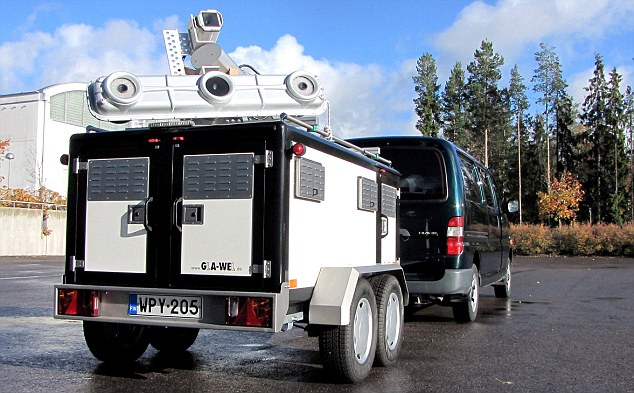
This is the chilling new super speed camera heading for Britain's roads - which can catch motorists committing five different offences at the same time.

The ASSET camera can film inside a vehicle and see if the driver is wearing a seatbelt and can also measure distances between cars to identify tailgating.

As well as speeding, the device reads number plates and can instantly recognise cars with out-of-date tax discs and no insurance.

Ready for your close-up? The ASSET camera can film inside a vehicle and see if the driver is wearing a seatbelt and reads number plates as well as instantly recognising cars with out-of-date tax discs and no insurance

Ready for your close-up? The ASSET camera can film inside a vehicle and see if the driver is wearing a seatbelt and reads number plates as well as instantly recognising cars with out-of-date tax discs and no insurance

The trailer-mounted device - the first to detect multiple offences at the same time - is connected to police computers via GPS and can instantly process prosecutions.

ASSET (Advance Safety and Driver Support for Essential Road Transport) is being funded with £7.1m of European Commission money.

It is currently undergoing testing in Finland and is expected to be rolled out across Europe from 2013, with each unit costing £50,000.

Today motoring organisations gave a mixed reception to the device.

AA president Edmund King said: 'Tailgating is more dangerous in most cases than speeding so I think most motorists would welcome it.

'We will need sophisticated technology to police the roads and there would have to be safeguards.

'But it needs to be done as a safety measure, not as a money-making machine.'

But the campaign group SpeedCameras.org said the devices should not become a replacement for traditional traffic police officers.

A spokesman said: 'We cautiously welcome a device that can detect several potential motoring offences, but it remains to be seen how accurate it is and how fairly it will be used.

'It's a pity that the main actions that cause the most accidents, namely not paying attention to the road, misjudging distances and other drivers' intentions, cannot be detected by a device of any sort.

'More police patrols and better driver education are the only ways to reduce accidents.'
The ASSET project runs from July 2008 to December 2011 and aims to improve traffic safety and reduce accidents caused by traffic violations.

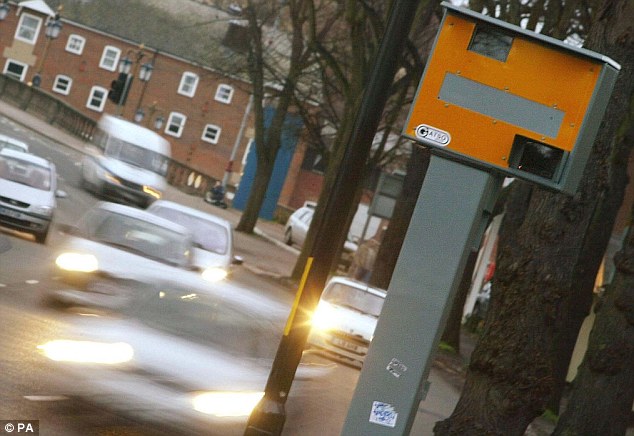
Caught in the act: Old style road cameras are not quite as sophisticated as the new 'Big Brother' cameras currently being tested in Finland

Caught in the act: Old style road cameras are not quite as sophisticated as the new 'Big Brother' cameras currently being tested in Finland

With a set of complex cameras, the 'Big Brother' style setup takes various pictures before filing details back to a central database via a GPS system.

The equipment automatically destroys images over one-month old and those in which no traffic violation is evident.

Its testing comes at a time when the government has cut central funding for speed cameras and reduced the road safety budget by £38 million - prompting fears roadside deaths and injuries could rise.

The number of people killed on Britain's roads was reduced by 12 per cent from 2,538 in 2008 to 2,222 in 2009 with 222,000 casualties, a reduction of four per cent.

The ASSET camera is currently being tested by the VTT Technical Research Centre in Finland.

It is currently mounted on a trailer but it is eventually expected to be converted to fit inside police vehicles.

Matti Kutila, senior research scientist at VTT Technical Research Centre, said: 'The main intention is to support traffic police to supervise that the drivers follow traffic rules such as wearing seat belts, preventing over-speeding and maintaining sufficient distance to the front vehicle.

'This of course is beneficial for road safety.'

Britain currently has cameras which can detect speeding and tax and insurance violations separately, but this is the first for multitude of offences.